
I did not buy the Jocuu Slow Masticating Juicer because I fell in love with cold-pressed juice. I bought it in March after a routine physical where my doctor told me my fiber numbers were embarrassing for someone who works in food photography for a living. Every review I read before ordering the Jocuu promised a quiet motor and dry pulp, and both of those things turned out to be true. What none of those glowing five-star reviews mentioned is the stuff that actually determines whether you keep using a juicer for three months or shove it in a cabinet by week two.
This is not another gushing Jocuu review. I've run this machine close to four mornings a week since March, plus weekend batches for my neighbor Teodoro, who borrows it for his post-workout smoothies. I like the Jocuu. I wouldn't have kept using it otherwise. But there are real tradeoffs the marketing copy and the five-star reviews gloss over, and if you're weighing this eighty dollar machine against a two hundred or three hundred dollar horizontal masticating juicer, you deserve the version nobody's posting.
The Quick Verdict
A capable, quiet masticating juicer that delivers on yield, but the prep time, foam on hard produce, and pulp cleanup are more work than the marketing lets on.
Amazon Check Today's Price →Every juicer review sounds the same. This one won't.
I'm not going to tell you the Jocuu is perfect, because it isn't. I'll tell you exactly where it earns its price and where it doesn't. Check today's price and see if it's in stock before you decide.
Amazon Check Today's Price on Amazon →How I Actually Use It
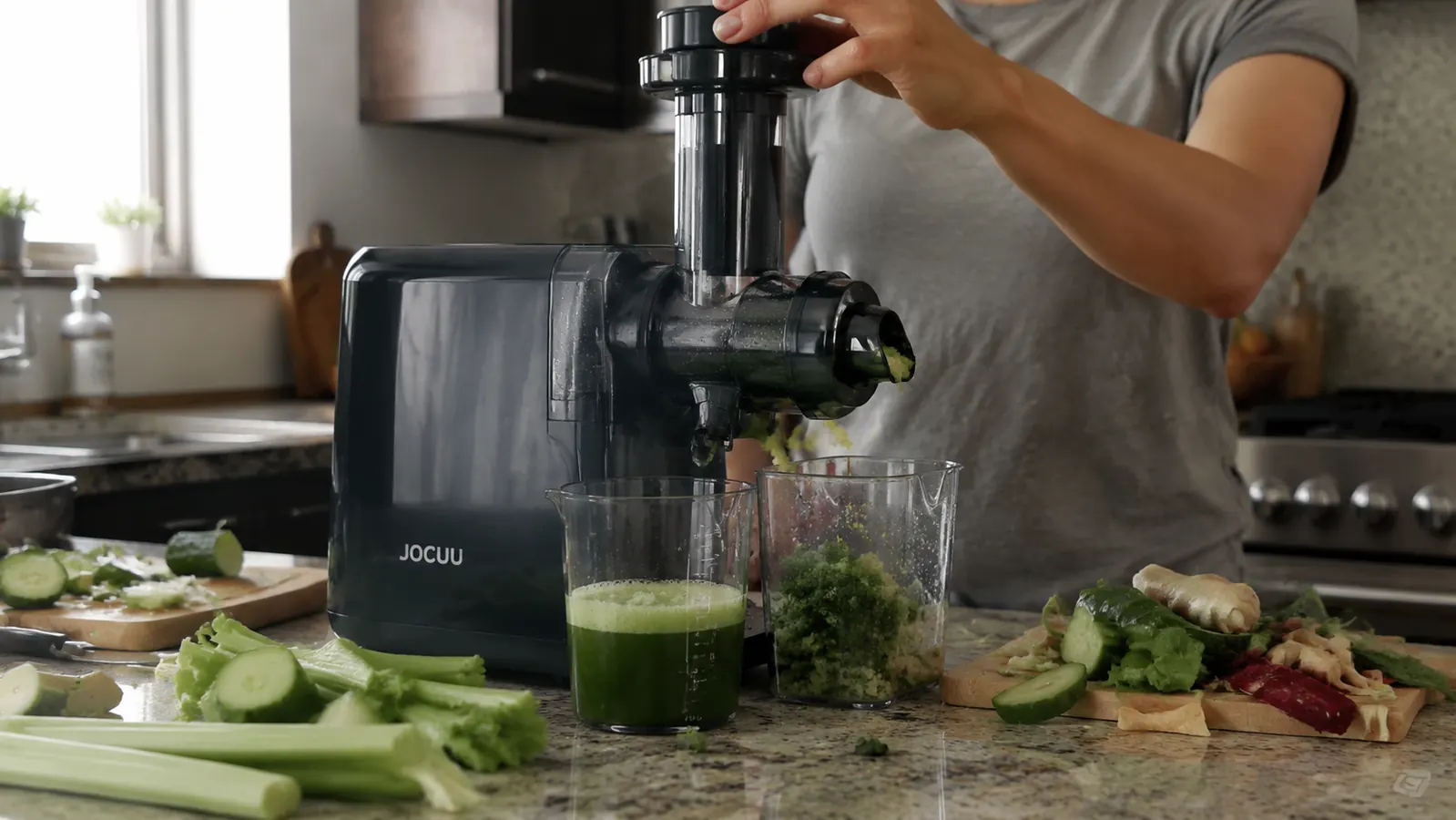
My Jocuu routine isn't the tidy morning ritual you see in juicer ads. I juice after work, usually around 7 p.m., because mornings in my apartment are already a scramble and I refused to add a machine with this many parts to that chaos. A typical batch is cucumber, celery, a handful of parsley, and half a green apple, run through in about four to five minutes once everything's cut. That part matches what I expected going in.
What surprised me was how much the Jocuu changed based on what I fed it. Soft produce like cucumber and citrus glides through with almost no resistance. Fibrous stuff like celery and kale stems is a different story, and I learned within the first week that skipping the chopping step is how you end up with a jammed auger and a juicer that sounds like it's grinding gravel.
I also tested the Jocuu the way most buyers won't, by letting it sit unused for eleven days during a work trip in April. Coming back to it cold, the safety lock arrows didn't line up on the first three tries, and I genuinely questioned whether something had shifted in the housing. It hadn't. I'd just forgotten the exact angle you need to twist the bowl, which tells you something about how unintuitive that lock is if you're not using the machine daily.
By week six I'd built a shorthand for the Jocuu that no manual walked me through. I keep a small bowl next to the cutting board just for chute-sized pieces, so I'm not stopping mid-prep to re-cut something too wide. Teodoro, who tried running his own batches without that system, jammed the auger twice in one weekend before I showed him the bowl trick, which tells you the learning curve is less about the machine and more about building a habit around it.
The Pulp Mess Nobody Warns You About
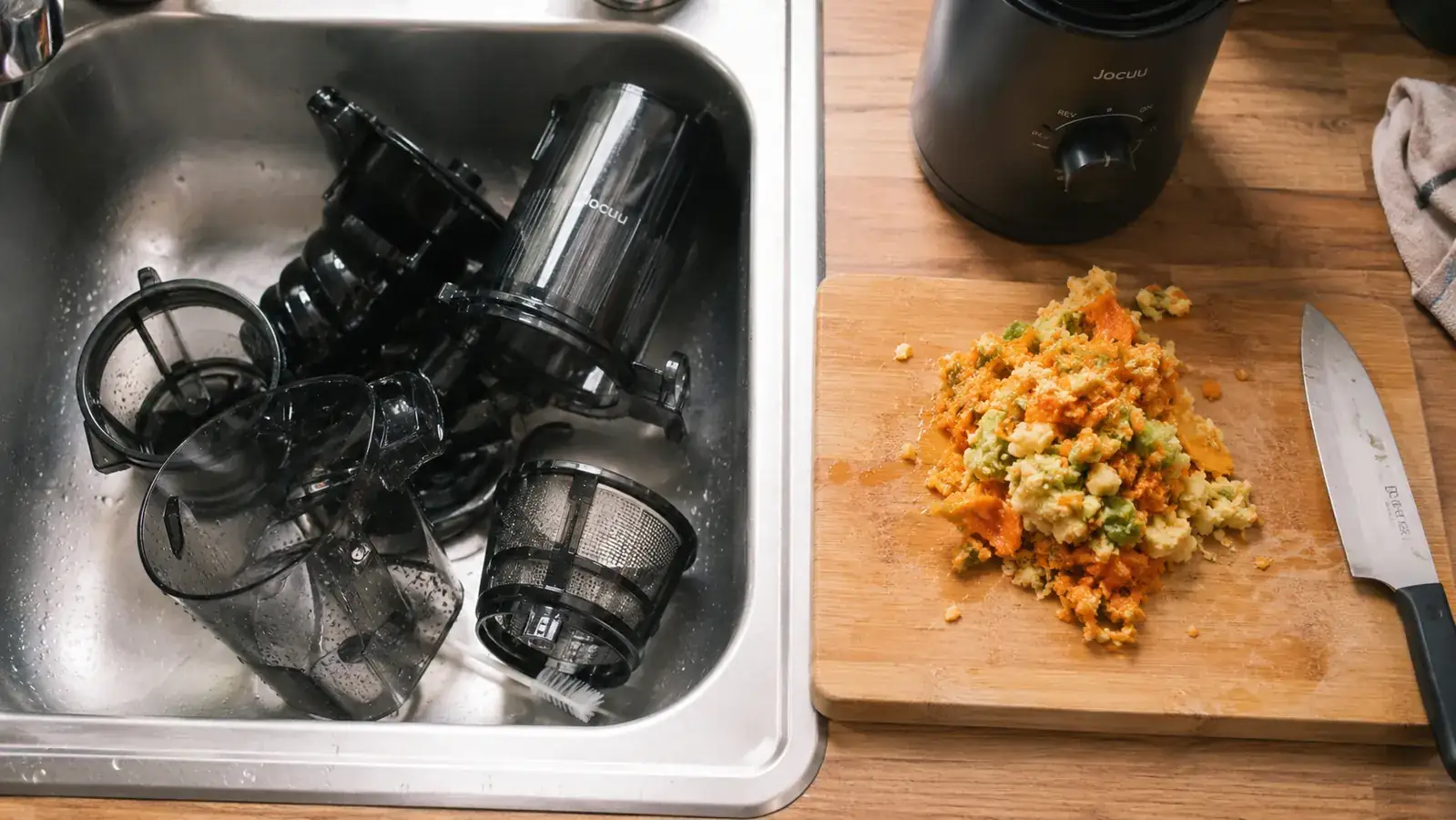
Every review praises the Jocuu's dry, crumbly pulp, and technically that's accurate. What those reviews skip is what happens between the chute and the pulp container. Fibrous produce like celery and kale stems doesn't always feed cleanly. I've had strings of celery fiber wrap around the auger shaft instead of pushing through to the pulp bin, which means I'm reaching in with a chopstick more often than any five-star review led me to expect.
The juicing screen is the real culprit here. It's fine mesh, which is exactly what gives the Jocuu its higher yield, but fine mesh also means pulp packs into it if you don't rinse between batches. I let a batch sit for twenty minutes once while I answered an email, and the dried residue took an extra six minutes of scrubbing with the included brush to fully clear. That's not a dealbreaker, but it's a real cost the box doesn't mention.
The pulp container itself fills up faster than I expected on a big batch. Two bunches of kale and I'm emptying it mid-run, which means stopping the machine, popping the container loose, dumping it, and reseating everything before I can keep going. On a weeknight when I just want a glass of juice, that pause is annoying. On a lazy Sunday it's a non-issue. Know which kind of juicer you are before you buy.
I started composting the pulp after the second week, mostly to stop feeling guilty about how much of it ended up in the trash. That's not a Jocuu-specific problem, every masticating juicer produces pulp you have to deal with, but it's worth factoring into your cleanup routine if you don't already have a compost bin going. The pulp itself is dry enough that it doesn't smell or attract fruit flies the way wetter centrifugal pulp does, which is at least one honest point in the Jocuu's favor.
Prep Time Is the Real Cost
Nobody puts prep time on the box, and it should be the first line. The Jocuu's chute is narrower than I assumed from product photos, which means real chopping, not just tossing whole produce in. Celery stalks need to be cut into three-inch pieces. Carrots need to be halved lengthwise if they're wider than a finger. A whole cucumber goes in fine, but anything gnarled, like ginger or beets with odd shapes, needs a cutting board pass first.
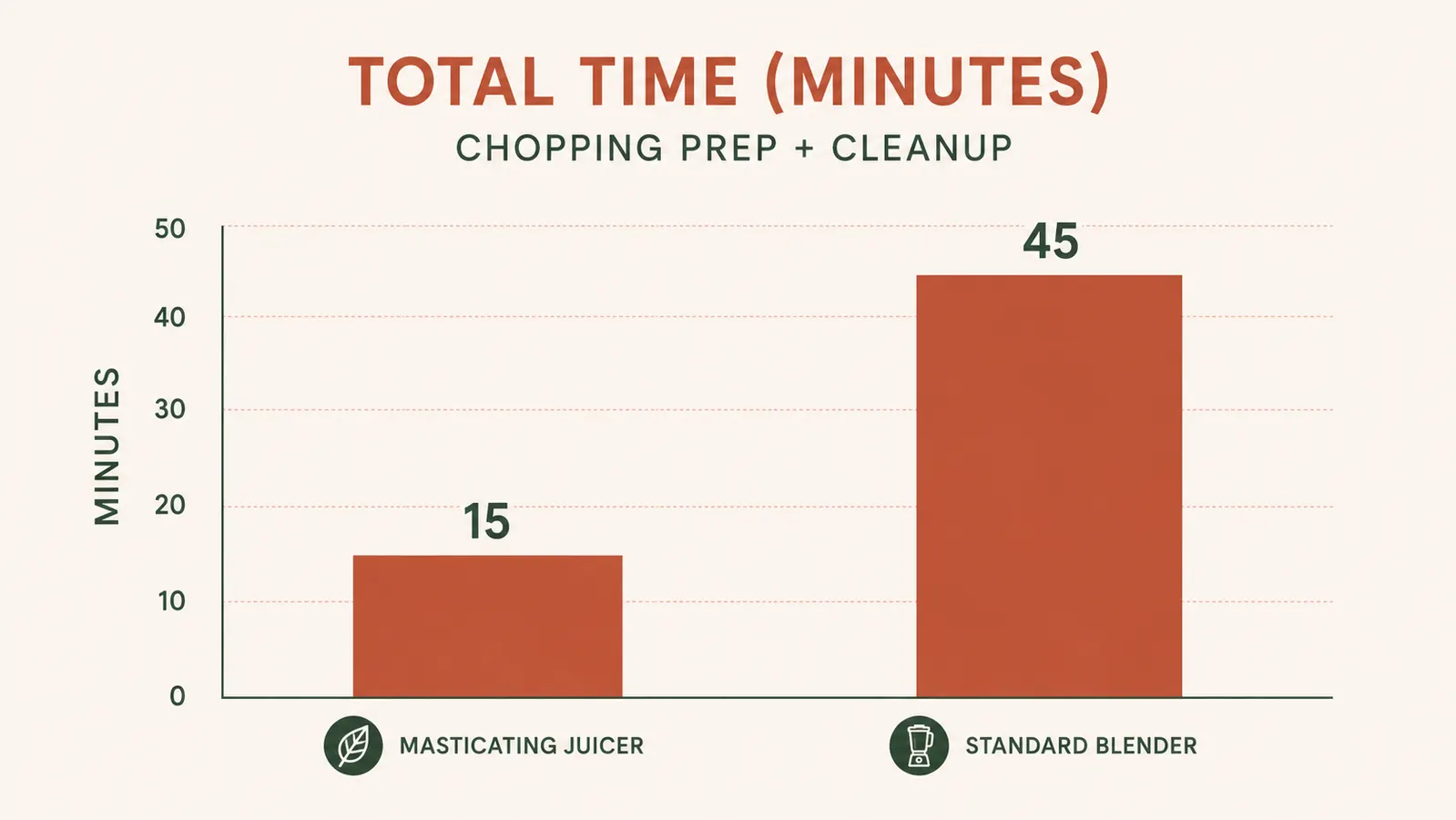
I timed it deliberately one Thursday. Chopping a full batch for two servings took nine minutes. Juicing itself took four. Cleanup took another seven once I factored in the screen. That's twenty minutes total for two glasses of juice, and that math doesn't show up anywhere in the marketing, where every demo video is sped up to look like a ninety-second process.
Compare that to my old blender routine, where I could throw whole fruit in with the skin on and blend in under two minutes with almost no chopping. The Jocuu wins on juice quality and yield, no question, but it loses badly on speed. If you're buying this expecting a fast weekday habit, budget the real twenty minutes, not the demo-reel version.
I tried to shortcut the prep a few times by batch-chopping produce on Sunday for the whole week, storing it in containers in the fridge. It worked for firmer vegetables like carrots and celery, which held up fine for four or five days. Anything with parsley or spinach in the mix wilted noticeably by day three, so that shortcut only buys you so much. If your weeknights are genuinely tight, plan the batch-chop around what actually keeps.
Foam, the Safety Lock, and Other First-Week Surprises
My first batch of apple and celery came out with nearly an inch of foam sitting on top, thick enough that I second-guessed whether the machine was actually working right. It settles if you let the glass sit for a minute, and it does get better once you learn to feed produce more slowly instead of dropping whole handfuls in at once. But that first-week foam is real, and if you're expecting the clean, foam-free pour from the product photos on day one, you'll be disappointed.
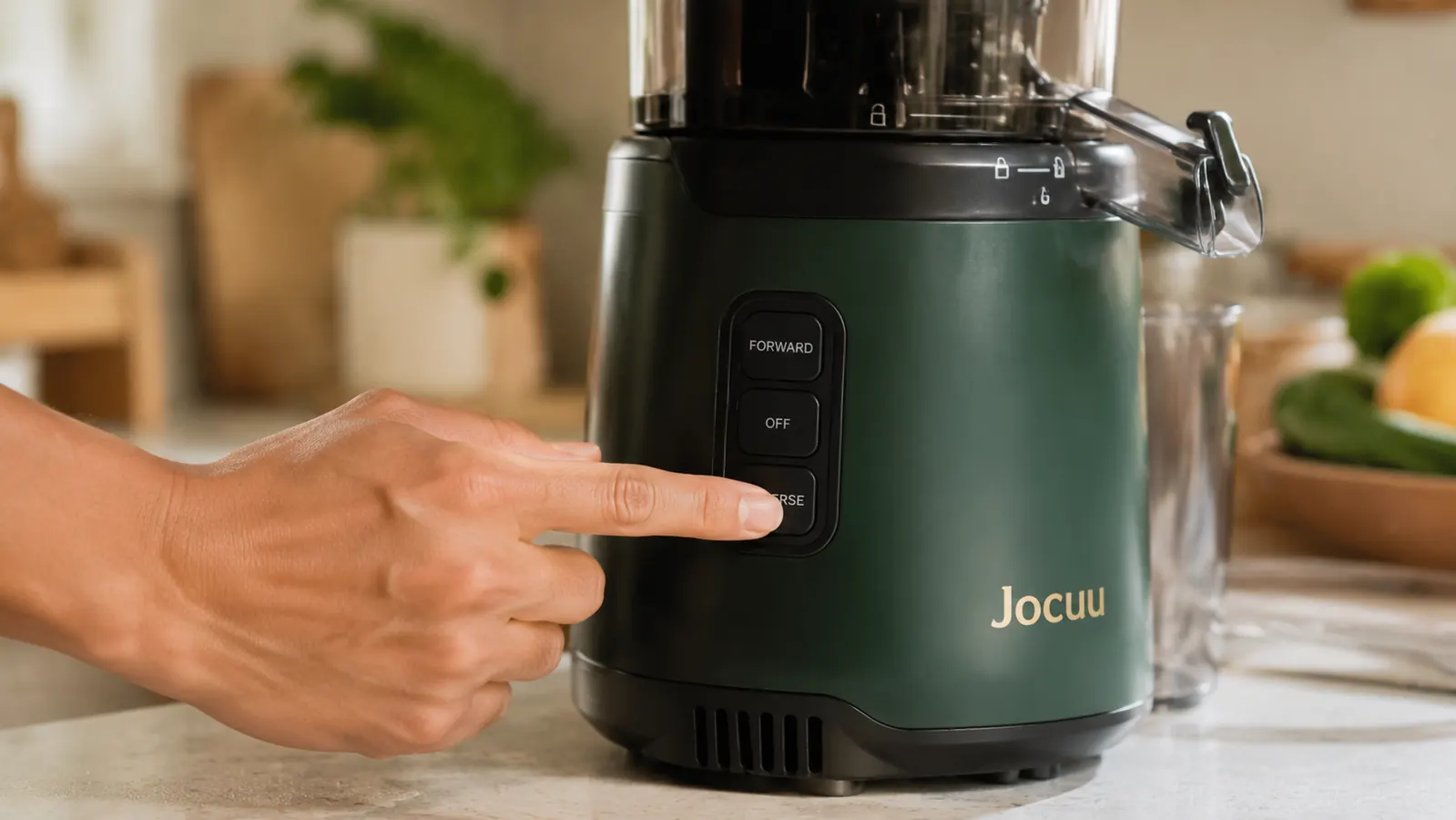
The safety lock is the other thing that trips people up, and I mean that almost literally. The Jocuu won't power on unless two small arrows on the bowl and lid line up exactly, and the tolerance for 'exactly' is tighter than it should be. I jammed a batch of carrot and ginger badly enough in my second week that the motor stalled completely. The reverse button cleared it in about eight seconds, which is genuinely the best safety feature on the machine, but I only found the button because I'd already read the manual cover to cover out of frustration from the lock issue days earlier.
None of this makes the Jocuu badly designed. It makes it a machine with a real learning curve that the five-star reviews, written mostly in the first week of ownership when everything still feels novel, don't capture. Give it two weeks before you form an opinion, good or bad.
Leafy Greens, the Premium Omega, and Who Actually Returns This Thing
Leafy greens are where the honest gap between the Jocuu and a premium horizontal masticating juicer, like an Omega in the two to three hundred dollar range, actually shows up. On kale and spinach specifically, the Jocuu's yield is solid but not exceptional. I ran a side-by-side with a friend's Omega on identical bunches of kale, and her machine pulled noticeably more juice from the same greens, with a wider auger clearly built for fibrous leaves rather than mixed produce.
If leafy greens and wheatgrass are the entire reason you're juicing, the Omega's extra cost buys real performance, not just brand name. For everyone else, the Jocuu handles a mixed diet of cucumber, celery, apple, carrot, and the occasional kale bunch competently enough that the price difference isn't worth it. I asked around in a juicing forum I lurk in, and the pattern among people who returned the Jocuu was consistent: nearly all of them were leafy-green purists who'd expected Omega-level yield at a third of the price.
The other return pattern I noticed was people who juiced once or twice a week rather than daily. The prep time and cleanup I described above only pay off if you're using the machine often enough for the yield gains to matter. Someone juicing occasionally is better served by a cheaper centrifugal machine or a hand press, because the Jocuu's real advantage is a compounding one that shows up over weeks, not a single Saturday morning batch.
I want to be fair to the Jocuu here, because the Omega comparison can make it sound like a lesser machine, and that's not quite right either. The Omega is built for a narrower job and does it better. The Jocuu is built for a broader one, mixed fruit and vegetables in the same batch, and does that job well enough that most people juicing at home wouldn't notice the yield gap without running the side-by-side test I did. Context matters more than the spec sheet.
What I Liked
- Genuinely higher juice yield than a centrifugal juicer on mixed produce
- Quiet motor that doesn't dominate a small kitchen or apartment
- Reverse function clears jams in seconds once you know where the button is
- Dry pulp on soft produce means less waste over time
- Handles a mixed diet of fruit and vegetables competently
Where It Falls Short
- Real prep time runs closer to twenty minutes total, not the sped-up demo version
- Fibrous produce like celery and kale stems can tangle around the auger
- Fine mesh screen needs rinsing between batches or cleanup gets ugly
- Safety lock arrows are fiddly and easy to forget if you don't juice daily
- Falls short of premium horizontal juicers specifically on leafy greens and wheatgrass
The Jocuu earns its price on a mixed diet of produce. It does not erase the twenty minutes of real work between chopping and cleanup, no matter what the demo video shows you.
Who This Is For
The Jocuu makes the most sense for someone juicing several times a week on a mix of produce, fruit, vegetables, the occasional greens, who wants better yield than a blender or centrifugal machine without paying premium juicer prices. If you're the type to actually rinse the screen right after juicing instead of letting it sit, the cleanup stops being a real problem within the first two weeks. It's also a solid fit for anyone easing into juicing for a health reason, like I did, since the learning curve is real but not steep enough to make you quit.
Who Should Skip It
Skip the Jocuu if leafy greens and wheatgrass are your primary reason for juicing. Save up for a horizontal masticating juicer with a wider auger instead, because that's where the yield gap actually costs you. Skip it too if you juice once a week or less, since the prep and cleanup time won't feel worth it at that frequency, a cheaper centrifugal machine will serve you better. And if you're someone who lets dishes pile up before washing them, budget extra patience for the screen, because it does not forgive being ignored.
Now you've got the honest version. Here's where to check the price.
The prep time is real, the foam settles, and the pulp mess is manageable once you rinse right away. If a mixed-produce daily juicer still sounds right for you, see today's price on the Jocuu on Amazon.
Amazon Check Today's Price on Amazon →