
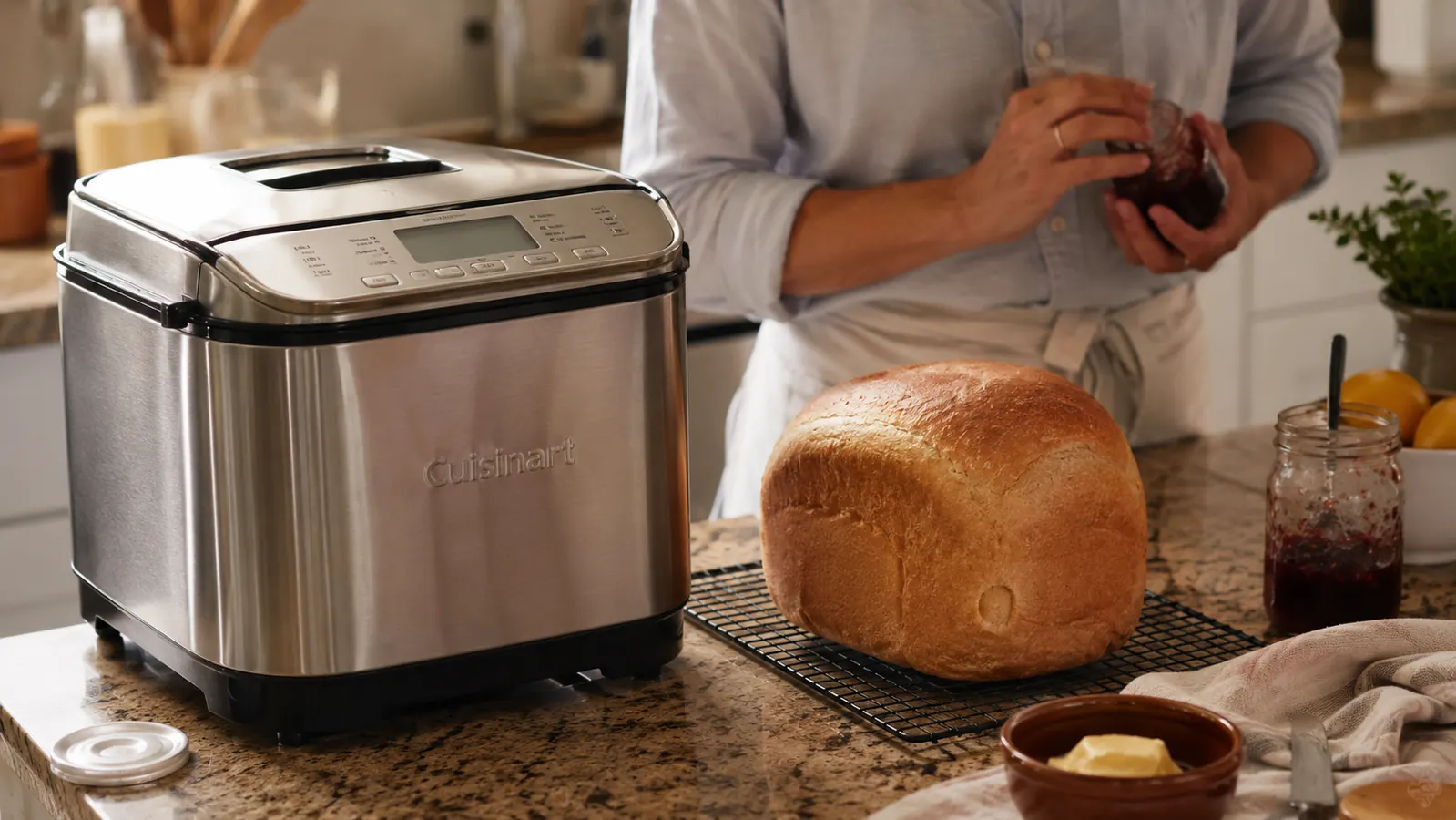
I almost returned my Cuisinart Bread Maker in the first ten days. Not because it failed, but because nobody who wrote a five-star review had mentioned the things that actually mattered once the box was open: the perfectly round hole the kneading paddle leaves in the bottom of every single loaf, the way that paddle sometimes refuses to let go of the bread when you flip the pan, or how loud this machine gets at 6 a.m. when you time a bake wrong. Six months later, I'm still using it every week. But this is the review I wish someone had handed me before I bought it.
The Cuisinart Bread Maker sits at 4.4 stars across nearly 17,000 reviews, and most of those reviews are glowing for a reason. It genuinely makes a decent loaf of bread with very little active effort. What those reviews gloss over is the learning curve, the small daily annoyances, and the honest tradeoffs that only show up once you've run the machine often enough to stop being impressed by it and start just living with it. That's the review I'm writing here, paddle hole and all.
The Short, Unfiltered Version
The Quick Verdict
A capable, reliable machine once you learn its quirks. The paddle hole and the noise are real and nobody mentions them, but most people who stick with it past week two end up keeping it.
Amazon Check Today's Price →Tired of grocery bread that's stale by day two?
The Cuisinart Bread Maker turns pantry staples into a fresh loaf with about five minutes of hands-on work. Check today's price and current availability on Amazon before this review goes any further.
Amazon Check Today's Price on Amazon →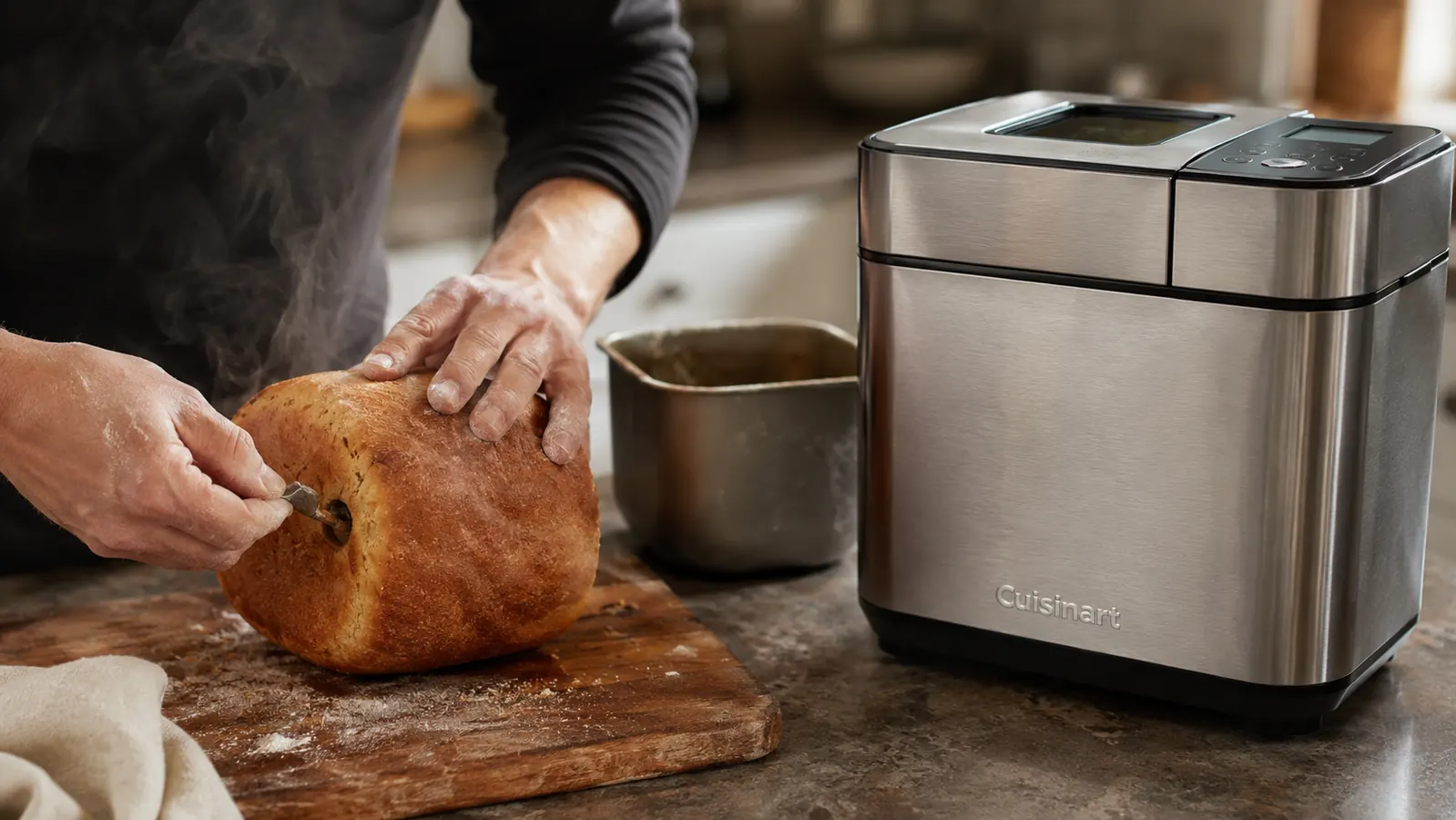
How I Actually Put It Through Its Paces
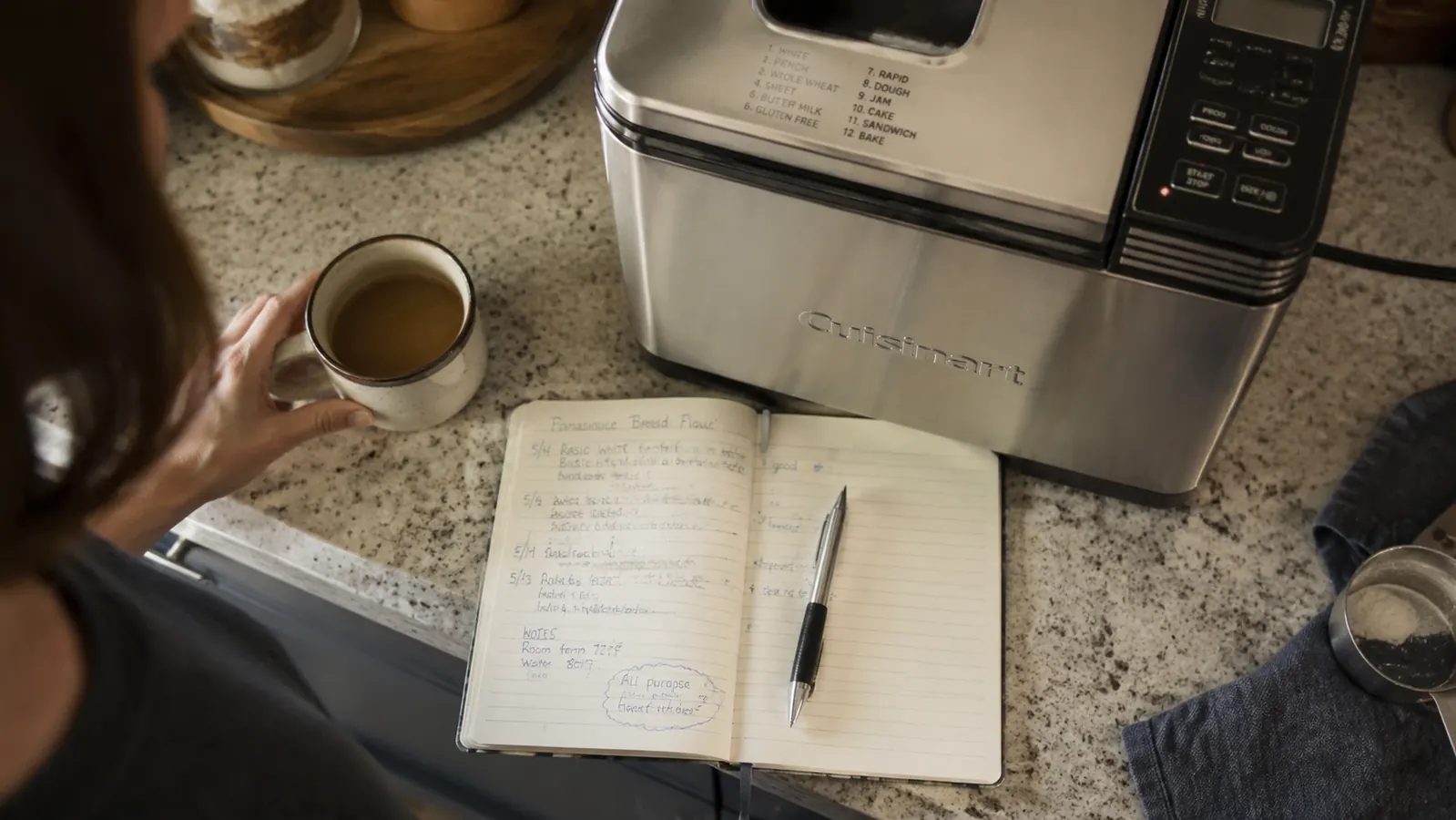
I didn't just run the Cuisinart through my normal week and call it a review. I timed every one of the 12 menu options with a stopwatch, weighed every loaf on a kitchen scale before and after baking, and logged the results in a spreadsheet instead of just trusting my memory. I also handed the machine to my neighbor Denise for two weeks, someone who had never used a bread machine before, specifically to watch where a first-timer gets stuck without any coaching from me.
That decision turned out to matter more than the spreadsheet did. I already knew how to work around the Cuisinart's rough edges after my first couple of loaves. Denise didn't, and watching her hit the same walls I'd smoothed over in week one is what convinced me this review needed to exist. The manual tells you what each button does. It doesn't tell you what actually happens when you press it for the first time.
Over six months I baked 41 loaves total, including eight I'd call outright failures: sunken centers, gummy bottoms, one that didn't rise at all because I'd used yeast that had been sitting open in a drawer for a year. I'm including those failures here on purpose, because a review that only shows you the good loaves isn't a review, it's an ad.
I also photographed the bottom crust of every loaf, all 41 of them, specifically to track how the paddle hole changed as I got better at pulling the paddle in time. It's a small detail, but it's the kind of thing a two-week impressions review can't tell you, because the improvement only shows up once you've built the habit into muscle memory.
The Paddle Hole Nobody Warns You About
Every loaf that comes out of the Cuisinart Bread Maker has a golf-ball-sized indentation in the bottom crust, sometimes going most of the way through the slice closest to the base. This is the kneading paddle's footprint, and it's not a defect, it's physics. The paddle has to sit somewhere while it mixes and kneads the dough, and that somewhere is directly in the loaf. Nobody mentions this in the marketing photos, which conveniently always show the top and sides of a loaf, never the bottom.
There's a partial fix. On the Basic, French, and Whole Wheat cycles, the Cuisinart pauses partway through with a beep that signals you can pull the paddle out before the final rise if you catch the window. I missed that window on my first six loaves because the manual buries this tip on page 14 instead of putting it anywhere near the quick-start guide. Once I started setting a second timer for that beep, the hole shrank from a crater to a shallow dimple most people wouldn't notice unless they were looking.
The bigger annoyance is when the paddle stays embedded in the loaf after baking instead of staying in the pan. It happened to me on roughly one loaf in six, always with denser doughs like whole wheat. You end up digging a hot metal paddle out of the bottom of your bread with a chopstick, which is a genuinely undignified way to end a baking session. A light coat of butter or oil on the paddle shaft before you start cuts this down significantly, but it's a workaround, not a fix, and it's one more thing to remember every single time.
The 12 Menu Options: What I Actually Use
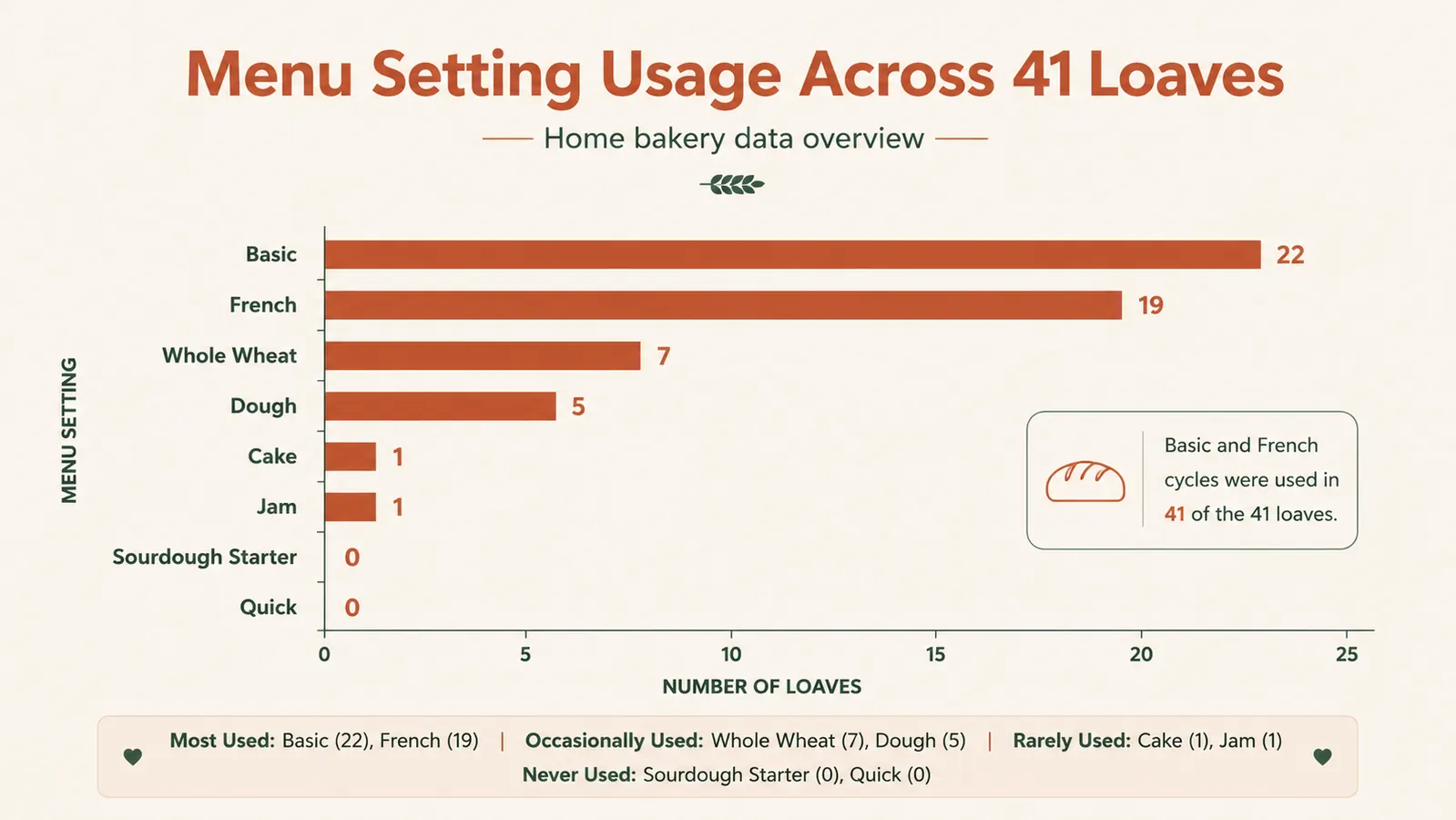
The Cuisinart Bread Maker advertises 12 menu options like it's a major selling point, and technically it is, but after 41 loaves the honest breakdown is that I use two of them regularly and have never touched at least three. Basic and French account for roughly 70 percent of everything I've baked. Whole Wheat gets used maybe once a month. Dough comes out for pizza night more than I expected going in.
The settings I tried once and shelved include Cake, which produced a passable pound cake but nothing I couldn't do better in a regular oven pan, and Sourdough Starter, which requires a level of daily feeding discipline I simply don't have. I never once used the Jam function, and Denise didn't touch it either during her two weeks with the machine. If you're buying the Cuisinart specifically because the box lists 12 functions, know that in practice you'll likely lean on three or four and treat the rest as novelty.
That's not really a knock against the Cuisinart specifically. Most bread machines pad their spec sheets the same way. But it changes how you should think about the price. You're not paying for 12 equally useful functions, you're paying for a very good Basic and French cycle plus a handful of extras you might open once out of curiosity.
The Noise Nobody Puts in the Spec Sheet
I set a bake to start at 5:30 a.m. exactly once, so it would be ready before my toddler woke up for breakfast. It backfired badly. The kneading phase kicks in about fifteen minutes into most cycles and produces a rhythmic thumping against the counter that carried straight through our open-concept condo and woke her up anyway. That was the last time I scheduled an early bake without checking the timing math first.
What surprised me more than the kneading noise were the beeps. The Cuisinart chirps at the start of a cycle, at the paddle-removal window, and again loudly at the finish, and none of those beeps are quiet. If you're using the delay timer to have bread ready overnight, know that the finishing beep is loud enough to wake a light sleeper in the next room. I now mute the possibility entirely by only running delay bakes when someone's already awake to hear it, which somewhat defeats the point of a delay timer in the first place.
Why My Neighbor Returned Hers
Denise liked the two weeks she spent with my loaner Cuisinart enough to buy her own. She returned it eleven days later. Her reasons were instructive, and none of them were about the bread tasting bad. She expected a loaf that looked like something from a bakery case, and the paddle hole and slightly irregular top bothered her more than she expected going in. She also lives in a studio apartment, and the kneading noise combined with limited counter space made the machine feel like more trouble than the convenience was worth.
Her return wasn't a failure of the Cuisinart. It was a mismatch between what she pictured and what a home bread machine actually delivers. I think about her return every time I see a five-star review that only talks about the smell of fresh bread and skips the practical reality of living with the thing daily. If you're buying this expecting picture-perfect, bakery-shaped loaves every time with zero visible seams, you're setting yourself up for the same disappointment she had.
The Staling Timeline Nobody Warns You About
This one caught me off guard the first month. A loaf out of the Cuisinart has no preservatives, so it stales noticeably faster than a grocery store loaf, usually by day two or three on the counter versus a week or more for a bagged loaf packed with dough conditioners. Nobody tells you this going in, and I ended up throwing out more than one loaf that had gone hard before we got through it, which cuts into the cost savings I mentioned earlier.
The fix took me a few tries to land on. Slicing the loaf in half and freezing whatever we won't eat within 48 hours works well, and a quick toast brings frozen slices back close to fresh. Storing the whole loaf in a paper bag rather than a sealed plastic bag also helps the crust stay crisp longer instead of going soft and chewy, which is the opposite problem from staling but just as annoying.
If you're used to a store loaf sitting on the counter for two weeks without a second thought, you'll need to adjust your mental model here. The Cuisinart rewards people who bake on a rhythm they can actually eat through, not people who bake a loaf and let it sit forgotten behind the fruit bowl.
The Real Math: Does It Actually Save You Money
I tracked ingredient costs for a dozen loaves in April. A 2-pound basic white loaf, using mid-range bread flour, yeast, and a tablespoon of butter, ran me right around a dollar sixty per loaf in ingredients. A comparable bakery loaf at my grocery store runs closer to five dollars. That's a real savings, but it's not the whole picture. Add electricity for a roughly three-hour cycle, the cost of the machine itself, and the ingredients that got wasted on my eight failed loaves, and the payback period stretches out to somewhere around four to five months of consistent weekly use.
The honest verdict is that the Cuisinart saves money if you use it regularly and don't waste too many loaves learning the machine. It does not save money if you bake sporadically, because unused flour and yeast go stale in the pantry just like anything else. The bigger value, at least for me, ended up being ingredient control rather than raw savings. I know exactly what's in every loaf, and that's worth something the spreadsheet doesn't fully capture.
What I Liked
- Basic and French cycles are genuinely reliable once you understand the paddle-removal timing
- Dough cycle handles pizza and roll dough well, saving a trip to the stand mixer
- Ingredient cost per loaf beats bakery bread by a wide margin with regular use
- Viewing window and delay timer both work exactly as described
- Pan and paddle held up fine across 41 loaves with no visible wear
Where It Falls Short
- The paddle hole in the bottom of every loaf is never mentioned in marketing photos
- Paddle sometimes stays stuck in the baked loaf, especially with denser doughs
- Kneading phase and finishing beeps are loud enough to wake a light sleeper nearby
- At least 3 of the 12 menu options go unused by most owners, including me
- Loaves stale faster than store bread and need to be eaten or frozen within a couple of days
The bread was never the problem. It was the gap between what the box implied and what actually happens the first time you flip a warm loaf out of the pan.
Who This Is For
If you bake weekly, have realistic expectations about what a home loaf looks like on the bottom, and don't mind a rhythmic thump during the knead cycle, the Cuisinart Bread Maker earns its place. It's a particularly good fit for anyone who wants control over ingredients, doesn't need bakery-perfect presentation, and is willing to learn the paddle-removal timing in the first couple of weeks rather than expecting it to work flawlessly on loaf one. It also suits households that go through bread fast enough to beat the staling clock.
Who Should Skip It
If you live in a small apartment where noise carries, bake bread only a few times a year, or you're buying this expecting bakery-shop looks with no visible seam on the bottom crust, this isn't the machine for you. Denise's experience is the honest cautionary tale here. It's a genuinely good bread maker for the right person, and a disappointing one for someone who pictured something it was never going to be, or who won't eat through a loaf before it goes hard.
Now you know what the five-star reviews leave out.
Paddle hole, noise, and all, the Cuisinart Bread Maker still earns a weekly spot on my counter. See today's price and current stock on Amazon.
Amazon Check Today's Price on Amazon →